
Consolidated financial statements under IFRS are the financial statements of a group prepared in accordance with International Financial Reporting Standards. They differ from statements prepared under the Polish Accounting Act in, among other things, their scope, the rules for determining the composition of the group, the measurement of non-controlling interests and the treatment of goodwill.
Key takeaways
- Consolidated financial statements under IFRS are prepared, among others, by public companies operating as a group and by companies whose owner requires it. Other groups may adopt IFRS voluntarily.
- IFRS require a statement of other comprehensive income, a statement of changes in equity and a statement of cash flows. They do not require a management report.
- Under IFRS, jointly controlled entities are accounted for using the equity method, and non-controlling interests can be measured at fair value or in proportion to the share in the subsidiary’s net assets.
- Goodwill is not amortised under IFRS. It is tested for impairment at least once a year in accordance with IAS 36.
- From 2027, financial statements under IFRS are prepared in accordance with IFRS 18, which replaces IAS 1 and divides the income statement into five categories.
Consolidated financial statements
Both separate and consolidated financial statements may be prepared in accordance with the Polish Accounting Act or International Financial Reporting Standards (IFRS). In this article we:
- present the most common cases in which a company is required to prepare consolidated financial statements under IFRS,
- present the key rules for preparing consolidated financial statements under IFRS and point out the main differences compared with local regulations (the Polish Accounting Act),
- compare the rules for preparing separate financial statements under IFRS and the Polish Accounting Act.
The obligation to prepare consolidated financial statements under IFRS
More and more companies are required to prepare consolidated financial statements in accordance with International Financial Reporting Standards. They include:
- public companies operating as a group, listed on the Warsaw Stock Exchange or on foreign stock exchanges,
- consolidating companies whose owner or parent (most often an entity operating outside Poland) requires financial statements under IFRS,
- other groups that have voluntarily adopted International Accounting Standards in order to provide greater transparency and credibility for investors or creditors.
Consolidated financial statements – differences between IFRS and the Polish Accounting Act
There are a number of significant differences between financial statements prepared under IFRS and under the Polish Accounting Act. In general, the differences between the two sets of regulations concern:
- the measurement of individual items presented in the financial statements,
- the content of the consolidated financial statements,
- the definition of control and the rules for determining the composition of the group for consolidation purposes,
- the choice of consolidation method for individual companies,
- the way non-controlling interests are determined and measured,
- the measurement of interests using the equity method,
- the recognition and write-off of goodwill.
Scope of consolidated financial statements under IFRS
Consolidated financial statements under IFRS comprise:
- the consolidated statement of financial position,
- the consolidated statement of profit or loss and other comprehensive income,
- the consolidated statement of changes in equity,
- the statement of cash flows,
- notes on the accounting policies adopted and other explanatory information,
- the consolidated statement of financial position as at the beginning of the preceding period, if the parent applied an accounting policy retrospectively, restated items in the consolidated financial statements retrospectively or reclassified items in the consolidated financial statements.
How does the scope of consolidated financial statements under IFRS differ from consolidation under the Polish Accounting Act?
Comparing the scope of consolidated financial statements under IFRS and the Polish Accounting Act, we see the following differences:
- IFRS require a consolidated statement of other comprehensive income, which is not required by the Polish Accounting Act,
- the consolidated statement of changes in equity and the statement of cash flows are mandatory components of consolidated financial statements under IFRS, while the Polish Accounting Act provides for exemptions in this respect,
- the opposite applies to the management report, which – unlike under the Polish Accounting Act – is not required by IFRS.
In addition, there are differences in the layout of the consolidated financial statements. The Polish Accounting Act precisely defines the format of the statements, presented in its appendix, while IAS/IFRS give the entity freedom to adapt the layout of the consolidated financial statements so that it properly presents the material elements of the group’s financial position and performance.
From 2027, companies reporting under IFRS apply IFRS 18, which replaces IAS 1 and introduces a new structure of the income statement. We describe how to prepare for this change in the article IFRS 18: how to move to the new financial statement structure.
Group structure for consolidation purposes under IFRS
List of entities subject to consolidation
The Polish Accounting Act refers to commercial law entities, thereby narrowing the legal form of companies that make up the group. International Financial Reporting Standards are more liberal in this respect and indicate that any entity, regardless of its legal form, can be included in consolidation.
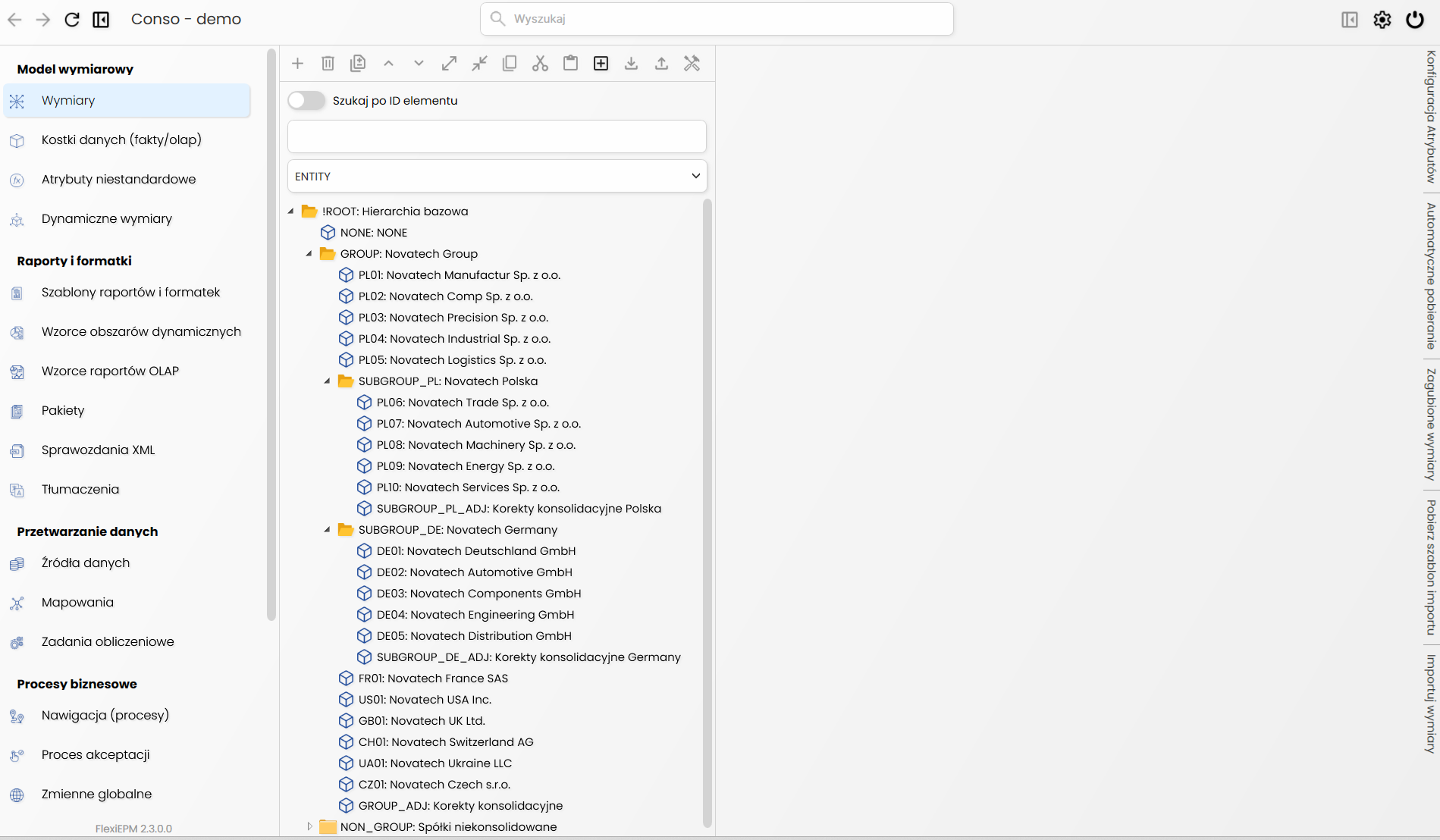
Consolidation of jointly controlled entities
IFRS provide for the equity method for jointly controlled entities, while the Polish Accounting Act leaves a choice between proportionate consolidation and the equity method.
Potential voting rights in determining the degree of control and the consolidation method
IFRS introduce one more concept to consolidation: potential voting rights. They are defined as share warrants, share call options, debt or equity instruments convertible into ordinary shares, or other similar instruments which, when exercised, can give the entity voting power over the financial and operating policies of another entity. They are taken into account if their holder has the practical ability to exercise them.
Methods of measuring non-controlling interests
Under IFRS, minority interests are called non-controlling interests. The difference does not end with the name. Under the Polish Accounting Act, minority interests are presented as a separate item of equity and liabilities, while IFRS specifically state that they should be presented as an item of equity. That is not all: IFRS allow non-controlling interests to be measured in two ways – at fair value or in proportion to the share in the identifiable net assets of the subsidiary. The Polish Accounting Act provides only for the latter.
Negative value of minority interests
Another significant difference between local and international regulations on the measurement of non-controlling interests (minority interests) concerns measurement after the acquisition date. The Act does not provide for a negative value of minority interests, while IFRS state that non-controlling shareholders share in both profit and loss; even if their share in the losses incurred by the subsidiary exceeds the profit attributed to them, the share in that loss adjusts the equity attributed to non-controlling shareholders.
Exclusions from consolidation
Local and international regulations also differ in terms of the possibility of excluding entities from consolidation. IFRS state that immaterial companies may be excluded from consolidation.
The Polish Accounting Act extends this to:
- entities held for sale within 12 months,
- entities for which restrictions on exercising control have been identified,
- cases of disproportionately high costs and the inability to obtain data.
Entities held for sale
It should also be remembered that, under IFRS, entities held for sale should be presented in non-current assets and discontinued operations.
Goodwill under IFRS
How do IFRS define the rules for determining and measuring goodwill?
First, goodwill may differ depending on how non-controlling interests are measured.
If, at the date of obtaining control, the fair value of the assets and liabilities of the acquired subsidiary exceeds the sum of the consideration transferred and any non-controlling interests, a gain on a bargain purchase is identified (negative goodwill does not arise). After verifying that it has been calculated correctly, the gain on a bargain purchase is recognised in profit or loss for the period.
The costs of obtaining control under IFRS are recognised directly in profit or loss for the current period and do not affect goodwill, as is the case under local regulations.
At subsequent reporting dates, goodwill is not amortised. At least once a year it is tested for impairment in accordance with IAS 36. Goodwill itself does not generate cash flows, so for the impairment test to be carried out, goodwill is allocated – already at the time of acquiring the shares in the subordinated company – to the individual cash-generating units of the subsidiary that are expected to benefit from the synergies of the acquisition. Each such unit should meet two conditions:
- it should represent the lowest level at which goodwill is monitored for management purposes,
- it should not be larger than one operating segment (IFRS 8).
Impairment test for the purposes of consolidated financial statements under IFRS
The methodology of the impairment test set out in IFRS comes down to comparing the carrying amount of a cash-generating unit (with the goodwill allocated to it) with its recoverable amount.
The recoverable amount under IFRS is the higher of:
- fair value less costs to sell, i.e. the price obtainable from the sale of the assets of the cash-generating unit,
- value in use, i.e. the present, estimated value of the future cash flows expected from the continued use of the assets of the cash-generating unit.
It should be remembered that an impairment loss determined in this way is recognised in the books only if the recoverable amount is lower than the carrying amount.
Local regulations (specifically National Accounting Standard No. 4, KSR 4) indicate that an impairment loss results from a comparison of two values: the carrying amount and the recoverable amount. The recoverable amount is the higher of:
- commercial value: net selling price or fair value less costs to sell,
- value in use: the entity’s ability to generate future economic benefits, i.e. forecast future cash inflows less forecast future cash outflows.
Separate financial statements under IFRS compared with the Polish Accounting Act
When preparing consolidated financial statements in accordance with IAS/IFRS, we need to prepare the separate financial statements of the companies subject to consolidation accordingly.
The table below sets out the key differences in the measurement and presentation of individual financial statement items under IFRS and the Polish Accounting Act.
| Financial statement item | IFRS | Polish Accounting Act |
|---|---|---|
| Fixed assets: significant components | Depreciated over their useful lives | n/a |
| Low-value fixed assets (one-off depreciation charge) | n/a | Expensed in full on acquisition |
| Major spare parts for fixed assets | Presented in fixed assets (depreciated or tested for impairment) | Presented in inventories |
| Fixed assets: borrowing costs | Capitalised as part of the cost of qualifying assets (IAS 23), excluding exchange differences other than those regarded as an adjustment to interest costs. Other borrowing costs are expensed in the period | Capitalised in the value of fixed assets together with exchange differences |
| Fixed assets: dismantling costs | Recognised in fixed assets | n/a |
| Non-current assets held for sale / discontinued operations | Measured at the lower of the carrying amount and fair value less costs to sell. Presented separately in the financial statements | n/a |
| Investment property | Can be reclassified between investment property, fixed assets and inventories. May be measured at fair value with changes recognised in profit or loss | Measured in the same way as fixed assets |
| Intangible assets | Internally generated intangible assets must also be recognised | n/a |
| Intangible assets | Development costs are capitalised; research costs cannot be capitalised | These stages are not distinguished |
| Inventories | n/a | Issues may be measured using the LIFO method |
| Provisions | Estimates of provisions must be discounted | n/a |
| Restructuring provision | Must be recognised | n/a |
| Contingent assets | Mandatory scope of disclosures | n/a |
| Leases | A right-of-use asset is recognised and depreciated | Rental costs are recognised in external services costs |
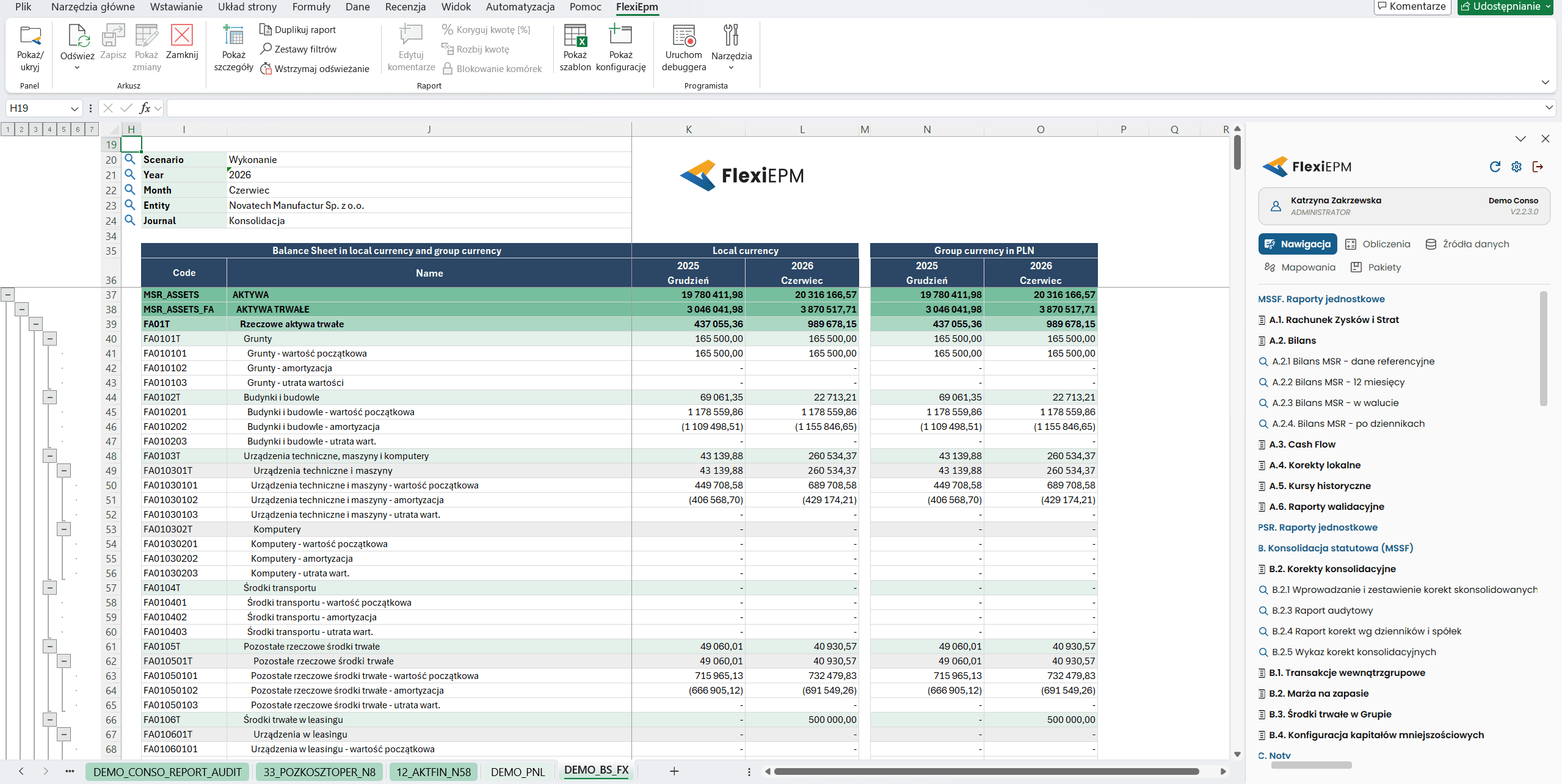
IFRS 16 – presentation of lease and rental agreements in financial statements under IFRS
The changes in lease regulations have caused some difficulties for accounting teams. IFRS 16 “Leases” requires a lease to be measured when it is first recognised, which involves, among other things, determining the interest rate implicit in the lease for the entity. In subsequent reporting periods, the measurement has to be updated, for example because of changes in interest rates or exchange rates.
Changes in the measurement will also result from changes to the terms of the agreement itself. A major challenge was the mass renegotiation of rents due to the limited use of leased space during the pandemic. Depending on the number of lease agreements an entity has signed, the workload and time needed to handle the issue increase significantly – imagine the owner of leased retail outlets across the country. Monitoring, updating and reconciling lease settlements has become a complex issue.
Separate and consolidated financial statements under IFRS and the Polish Accounting Act, with notes, the XML e-statement and a Word document, can be prepared in the FlexiEPM financial statements software.