IFRS 16 lease accounting
When does IFRS 16 apply? How should a lessee present leases in its financial statements to comply with IFRS 16? How do you measure the right-of-use asset and the lease liability?
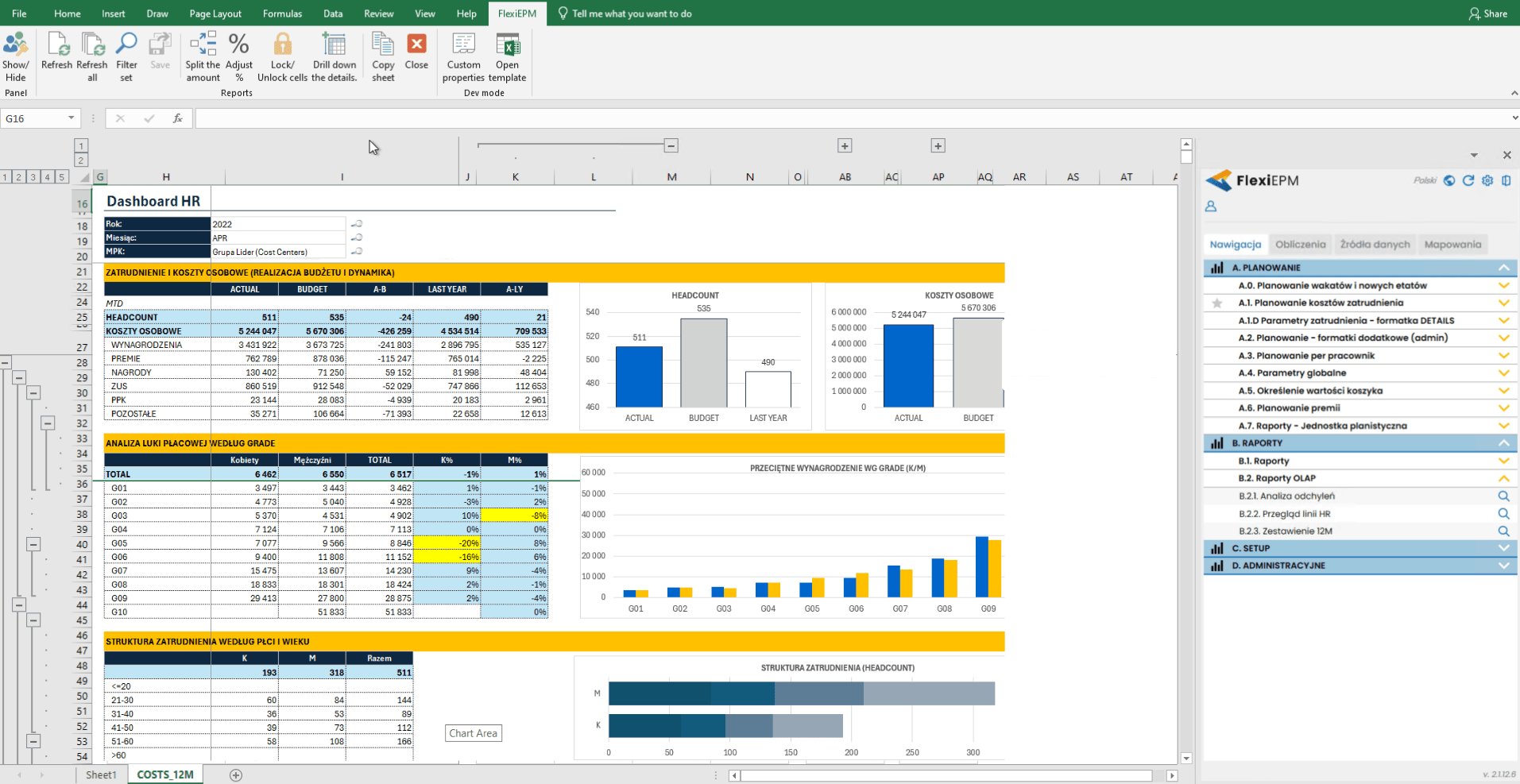
Personnel cost budget monitoring in FlexiEPM is a monthly comparison of actuals with the budget and forecast for headcount, salaries and employer costs, down to individual employees and pay components. Monitoring of the whole company budget is described on the performance monitoring page.
Actuals come from payroll and employee records, and the budget and forecast from workforce planning and salary planning in the same model. The system automates personnel cost reporting and shows what drives variances.
Personnel cost reports and indicators are prepared automatically once payroll data is loaded, including at month-end close, with no manual file processing.
Budget, forecast and actuals are in one model, so variances are visible for the whole organization, a department and an individual employee. You can trace every value to a specific employee and pay component.
The same data is used for reports to the Management Board and Supervisory Board. At Grupa Żywiec, HR reports reconcile 100% with the financial result, and comparing the simulated payroll with actuals quickly reveals discrepancies at month-end close.
FlexiEPM integrates ACTUAL, BUDGET and FORECAST scenarios into one central database, enabling precise budget monitoring across monthly, quarterly and year-to-date perspectives.
Data on headcount, salaries and personnel costs is in one model, so you track budget variances on an ongoing basis and in the same breakdowns.
Personnel costs flow into cost center templates and the income statement, so their impact on company results is visible.
FlexiEPM is used to analyse and explain variances in personnel costs.
The system breaks down differences at individual employee level and identifies drivers such as new hires, terminations, organisational changes, salary increases or the full-year effect of salary changes. Built-in models ensure fast, accurate variance explanations without manual work.
FlexiEPM combines HR and finance data and lets you analyse it across many dimensions.
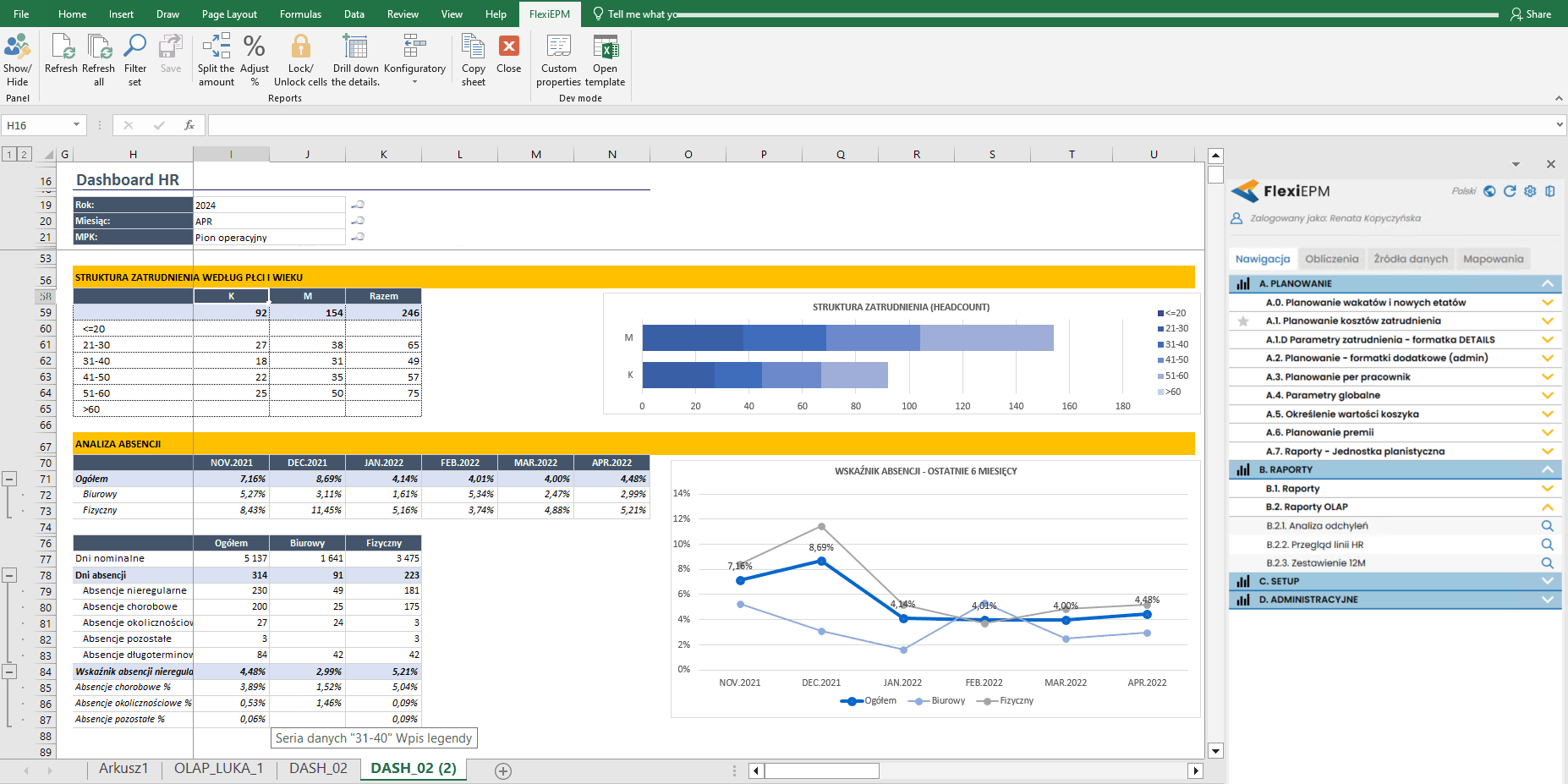
You can report using different perspectives, including job position, organisational structure, P&L lines, gender, age, tenure, education level and more. This flexibility provides a deeper understanding of workforce dynamics and supports data-driven workforce planning.
This shows the structure of the workforce and how it changes over time.
FlexiEPM prepares data for the workforce part of the ESG report (ESRS S1 Own workforce).
Workforce structure, compensation, turnover and absenteeism are in the system from employee records and payroll, so they do not have to be collected separately for the ESG report.
FlexiEPM is a practical solution for organisations seeking to integrate ESG workforce metrics into everyday HR and financial management.
#KNOWLEDGE BASE

When does IFRS 16 apply? How should a lessee present leases in its financial statements to comply with IFRS 16? How do you measure the right-of-use asset and the lease liability?

How do you prepare a consolidated balance sheet for a group of companies? This practical guide walks you through the process step by step: preparing separate balance sheets, local adjustments, capital adjustments and goodwill, and eliminations of intercompany balances.

Since IFRS 16 came into force, lease liabilities have become more complex to manage. One of the key elements is discounting future payments. In this article we show how to calculate the present value of the liability, compare different approaches to the discount factor and explain what to watch out for in monthly calculations.