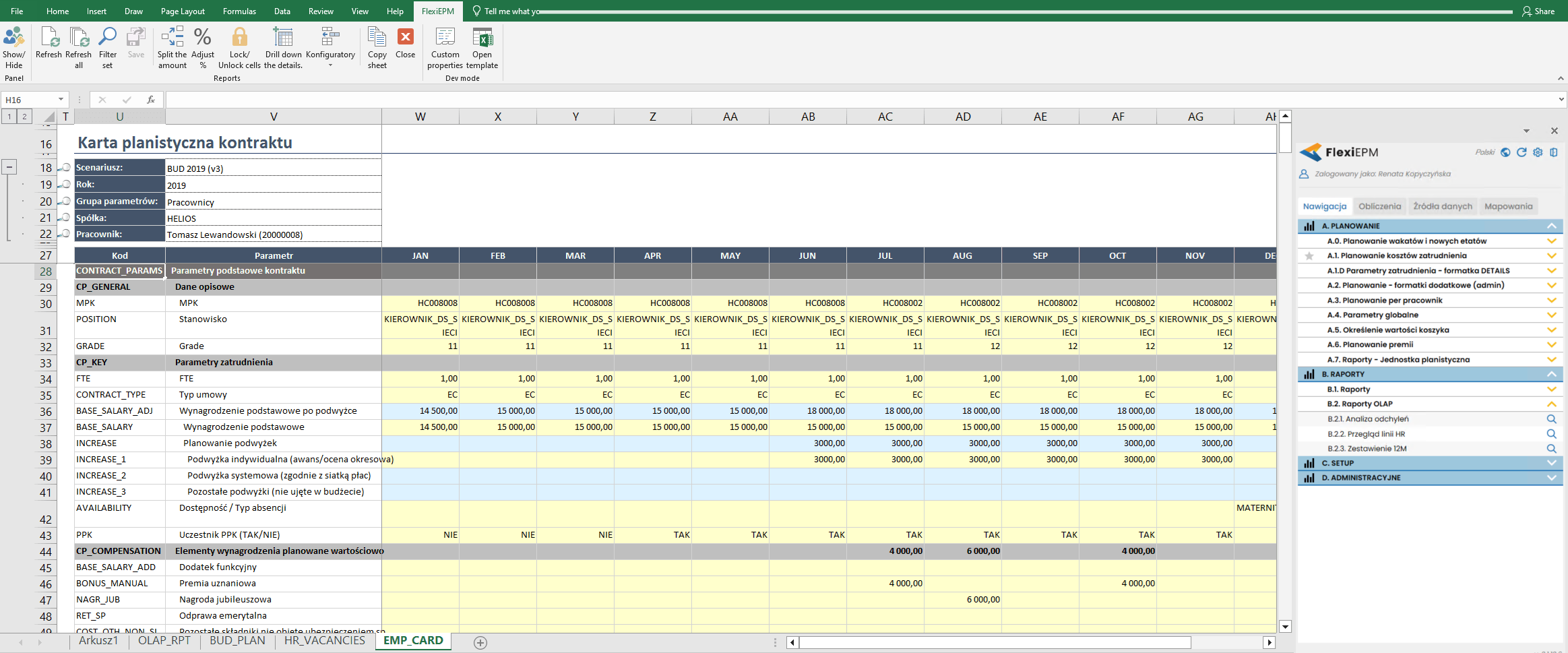
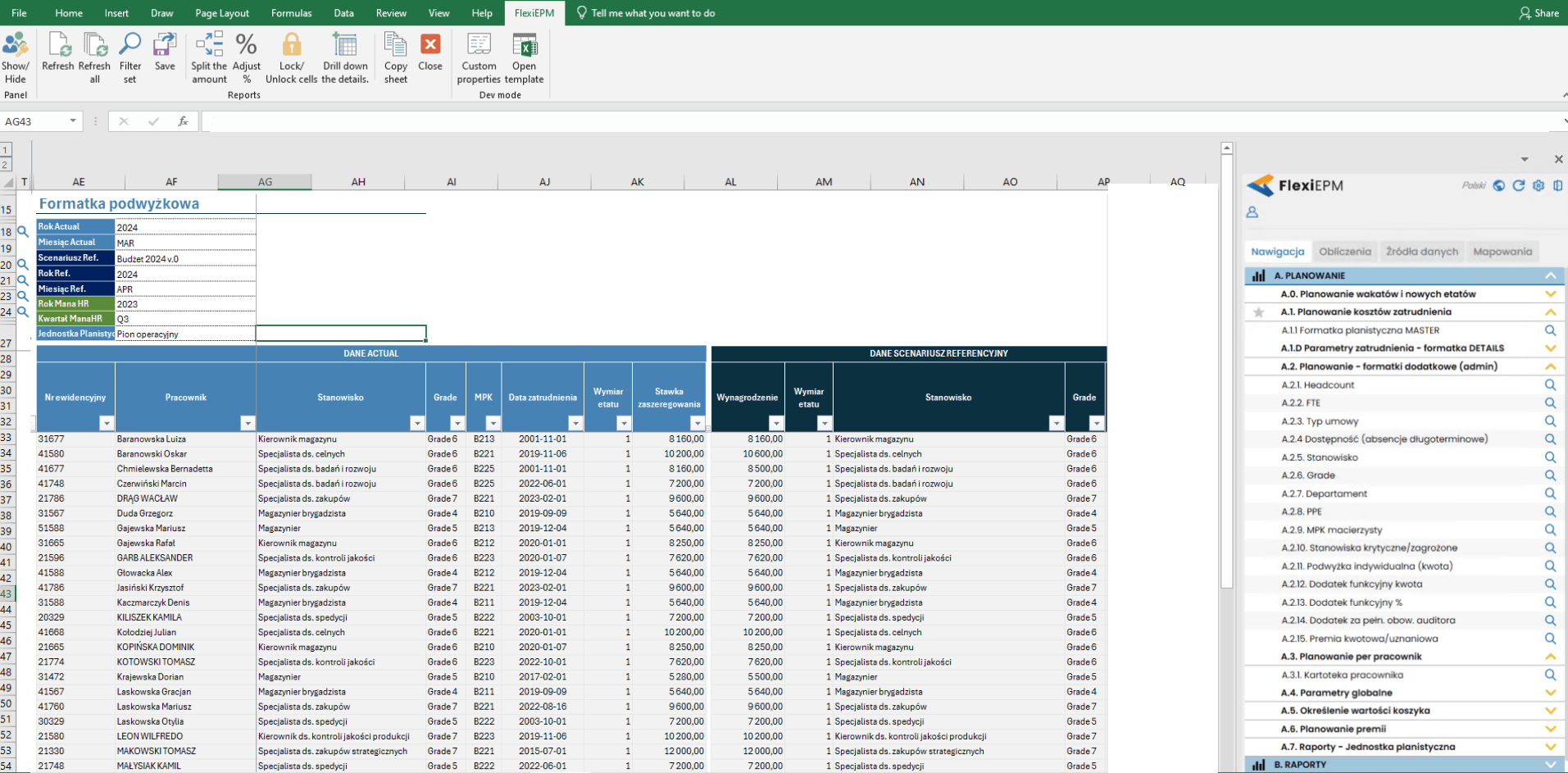
The starting point is the as-is budget, that is, current employees with current salaries. This version is created without user input, based on data already collected in the system.
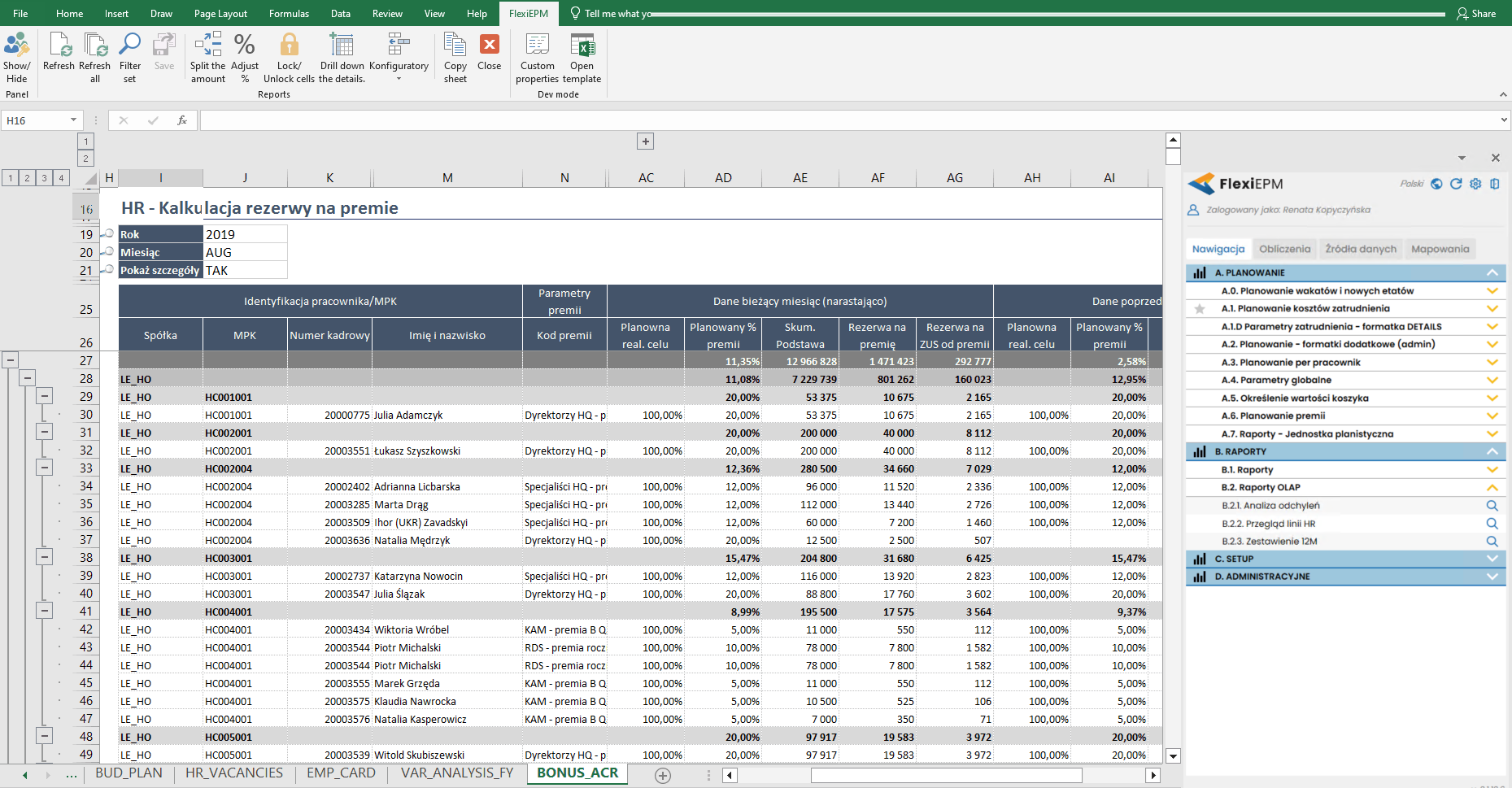
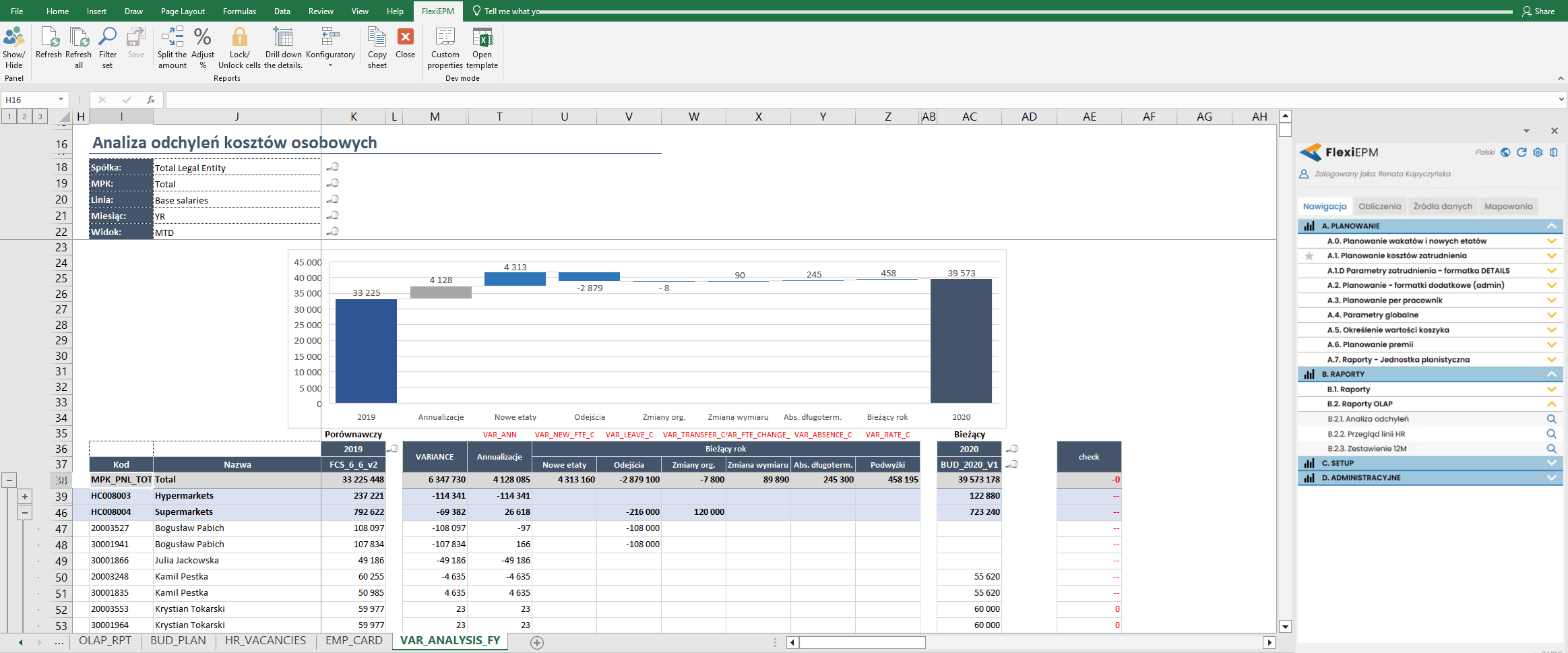
In the planning process, organisational changes, promotions, vacancies and pay rises are added on top of this base. The model recalculates the other components: allowances, bonuses and awards according to the company’s pay regulations, employer social security (ZUS) contributions, employee capital plan (PPK) contributions, contributions to the disability fund (PFRON) and allocations to the company social benefits fund (ZFŚS).
Changing a parameter, for example a contribution rate or a threshold, requires one update. The recalculation flows through the whole budget.
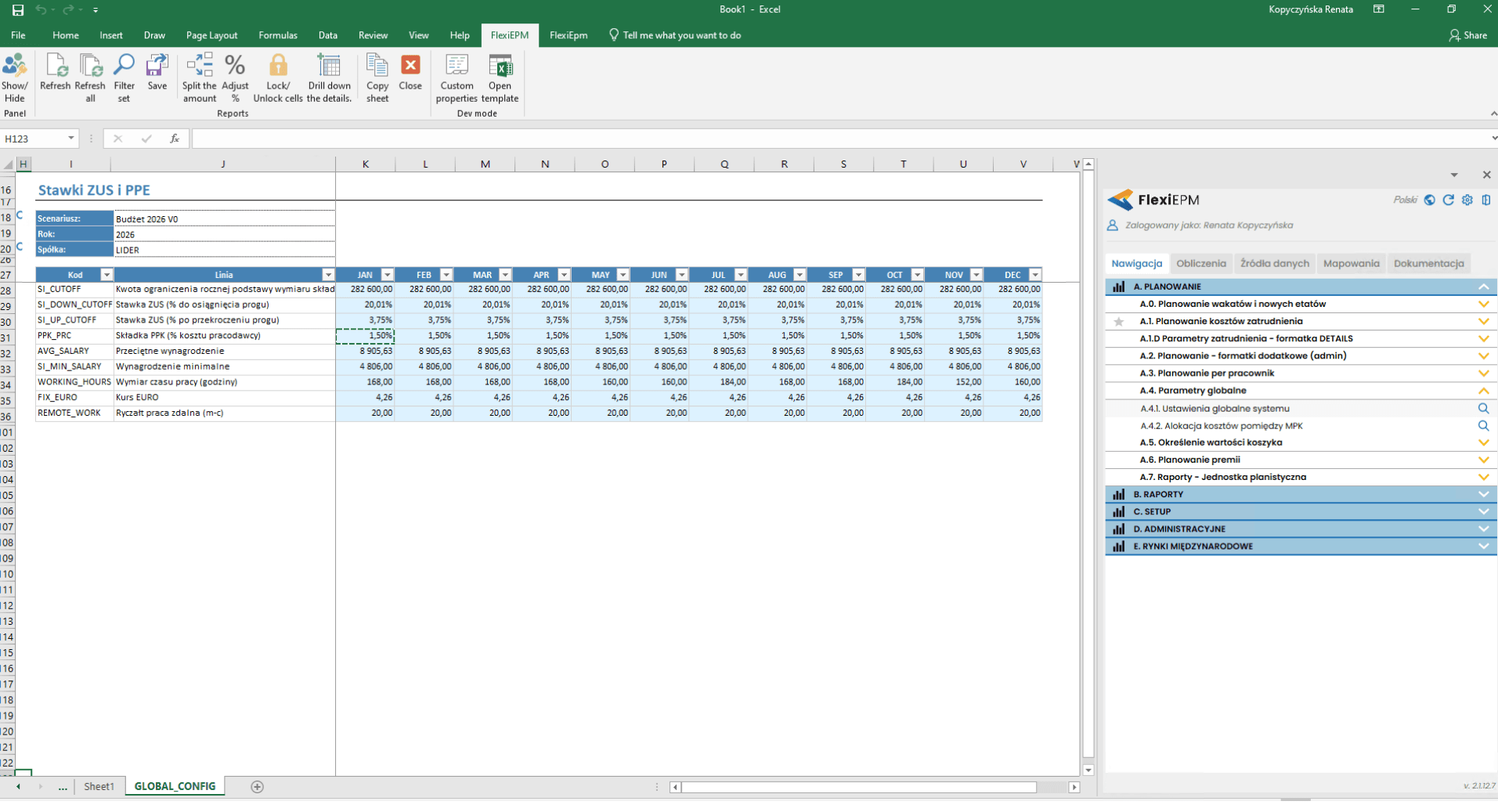
The mechanism uses two social security rates: one until the annual contribution base cap is reached, that is, 30 times the average salary, and a second, lower one after it is exceeded, when pension and disability contributions stop. Both rates and the cap itself are global system parameters. Once entered, they work automatically for all employees and all budget lines.
If the cap is exceeded during a month, the system does not switch the rate for the whole amount at once. It calculates contributions proportionally, only on the part of the base that still fits within the cap.
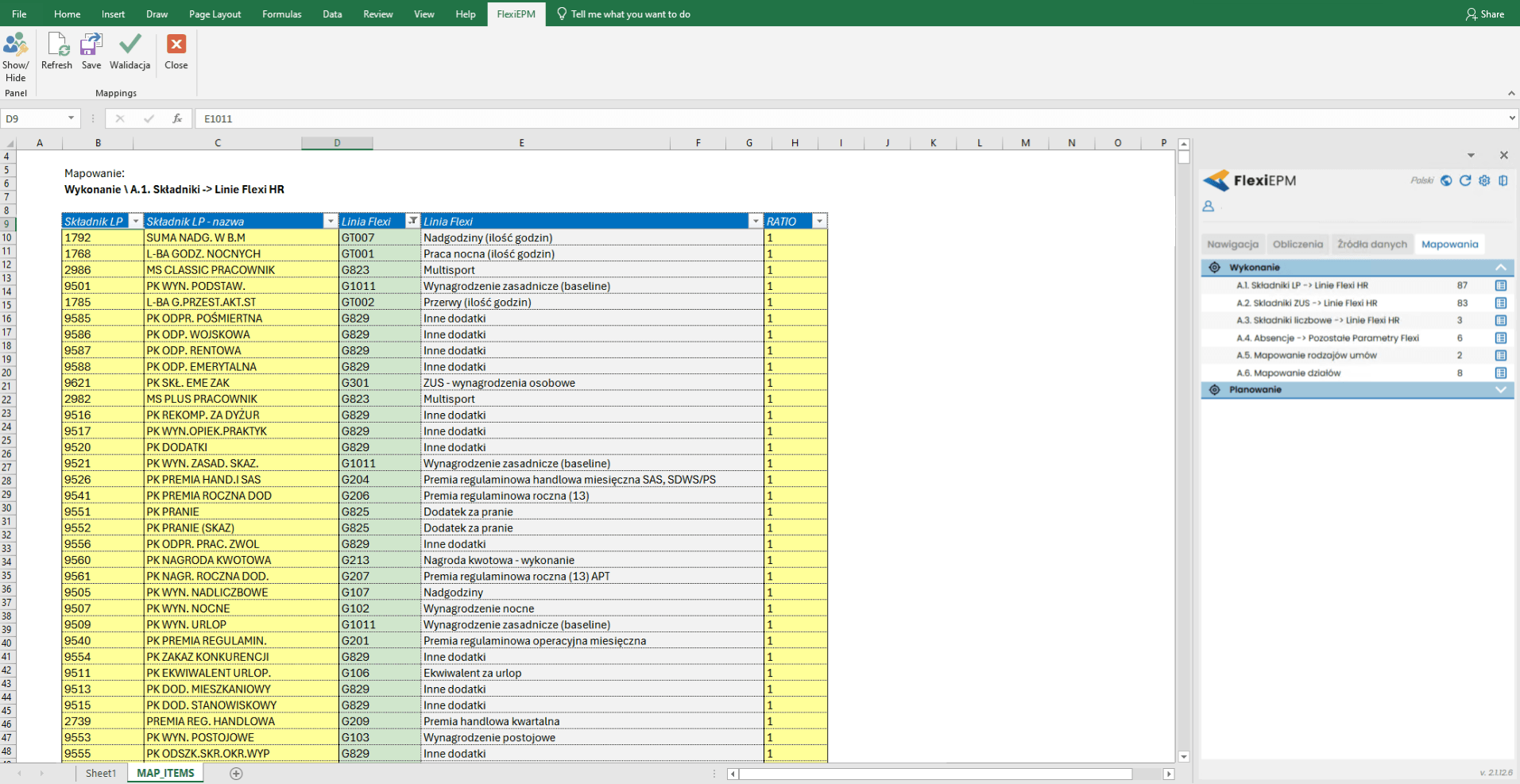
PPK and PPE contributions are configured separately, because some employers use employee capital plans and others employee pension schemes, with different rates. HR also decides which cost lines in the budget are subject to social security contributions at all, so, for example, expense reimbursements or selected benefits can be excluded from automatic calculation.