IFRS 16 lease accounting
When does IFRS 16 apply? How should a lessee present leases in its financial statements to comply with IFRS 16? How do you measure the right-of-use asset and the lease liability?
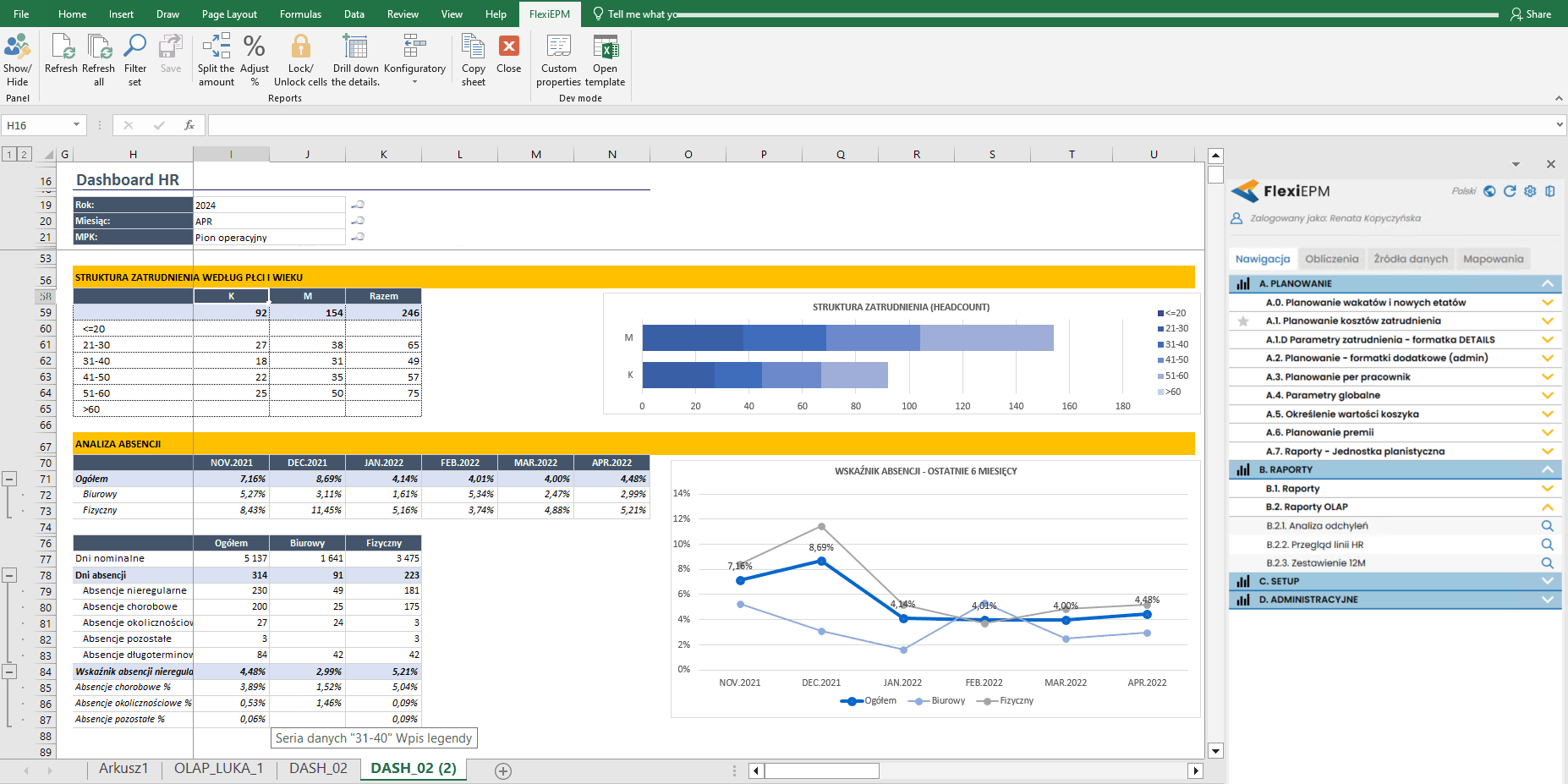
Workforce planning is a plan of the number of people (headcount) and full-time equivalents (FTE) for the coming months, including vacancies, leavers and organizational changes. In FlexiEPM, the salary and personnel cost budget follows directly from this plan.
The first version of the plan is created from HR and payroll data, and managers and HR Business Partners complete it in planning templates. The whole module is described on the HR controlling system page.
FlexiEPM introduces a consistent planning standard across the entire organization. Whether the workforce plan is created centrally by the HR department or involves unit managers, the system provides templates tailored to each participant’s role.
FlexiEPM consolidates the data entered by users automatically, without merging files.
You can plan headcount and FTE directly in detailed templates that contain key employee information. The flexible design of these templates allows you to include employee data, contract type, cost center, position, performance review results, or pay raise dates, fully aligned with your company’s internal structure.
All key planning parameters, for both headcount and compensation, fit in one main template used by managers and HR Business Partners.
If you already have a preferred planning layout, FlexiEPM can keep it and adapt it to your company’s structure.
The main template allows flexible definition of HR parameters: for each employee or open position, you can specify start and end dates, working time, and salary terms.
The salary planning model is fully aligned with your organization’s employment types and business model, supporting monthly salaries, hourly wages, or piecework. It also allows for various compensation components, such as bonuses, allowances, or incentive pay.
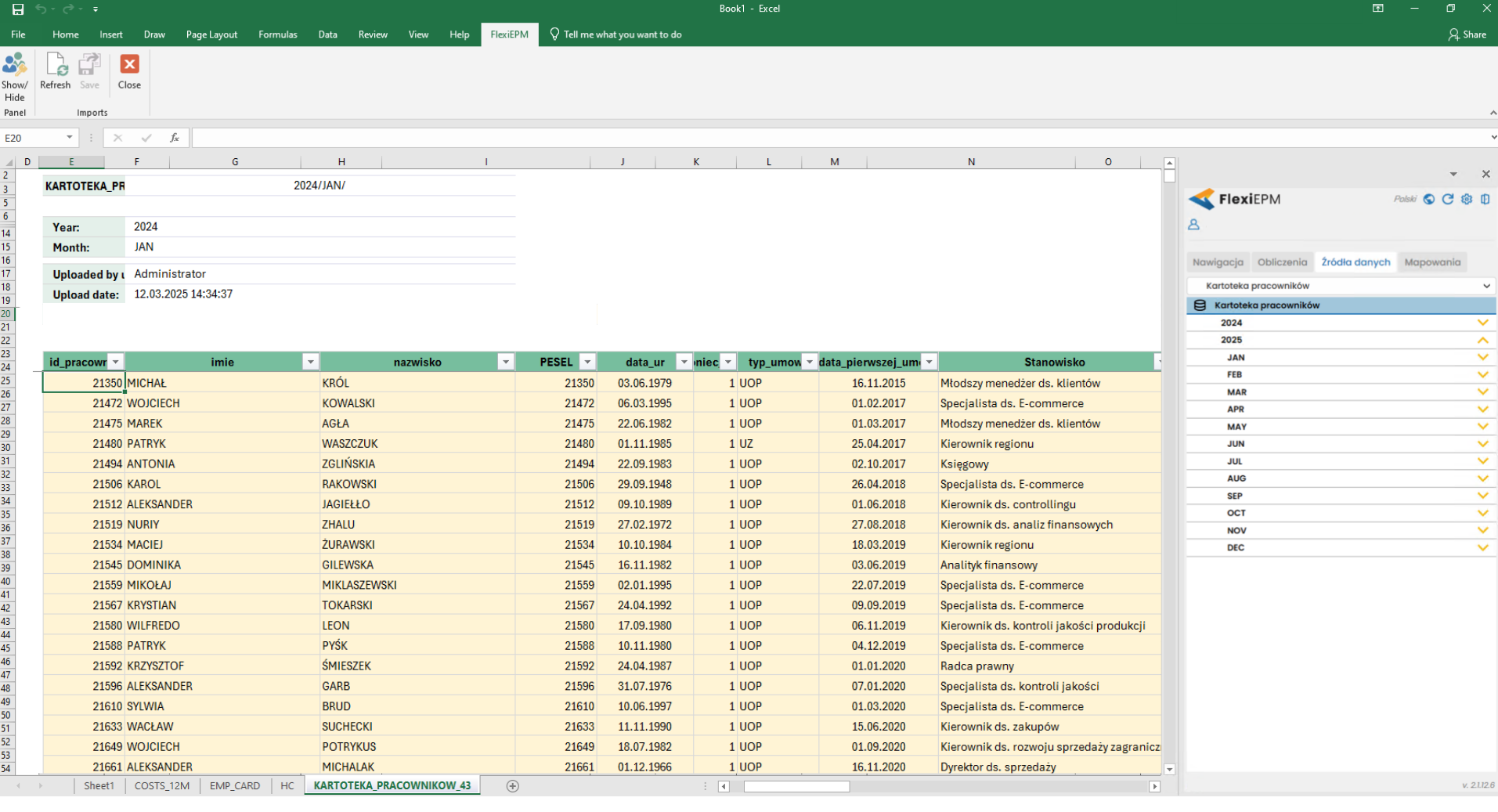
Thanks to direct integration with your HR and payroll systems, FlexiEPM can automatically generate the first version of your workforce plan, complete with employee data, salary information, and job details. This eliminates manual data entry and the need to divide files among different managers.
The system pulls data directly from employee records, so the planning model is prepared automatically. Data is refreshed overnight or on demand, also during the planning process, so templates reflect changes made after the budget started.
The integration can include a wide range of data: employee records, contract terms, cost centers, job positions, pay history, long-term absences, and other factors relevant to bonuses or benefits allocation.
FlexiEPM handles requests for new positions and vacancies and setting salaries for them, with approval according to company rules.
The built-in vacancy management process provides managers and HR Business Partners with dedicated templates for submitting requests, while department heads and HR coordinators can review and approve staffing plans.
This multi-level approval process can also be linked to budget scenarios, enabling the creation of alternative HR budget versions based on different hiring assumptions.
FlexiEPM supports rolling forecasts: each vacancy can be linked to a hired employee, ensuring seamless iteration and monitoring of plan execution throughout the year.
FlexiEPM offers an easy way to model organizational changes. When preparing salary budgets, you can quickly reassign costs to a new structure, manage employee transfers between cost centers, or merge and split departments.
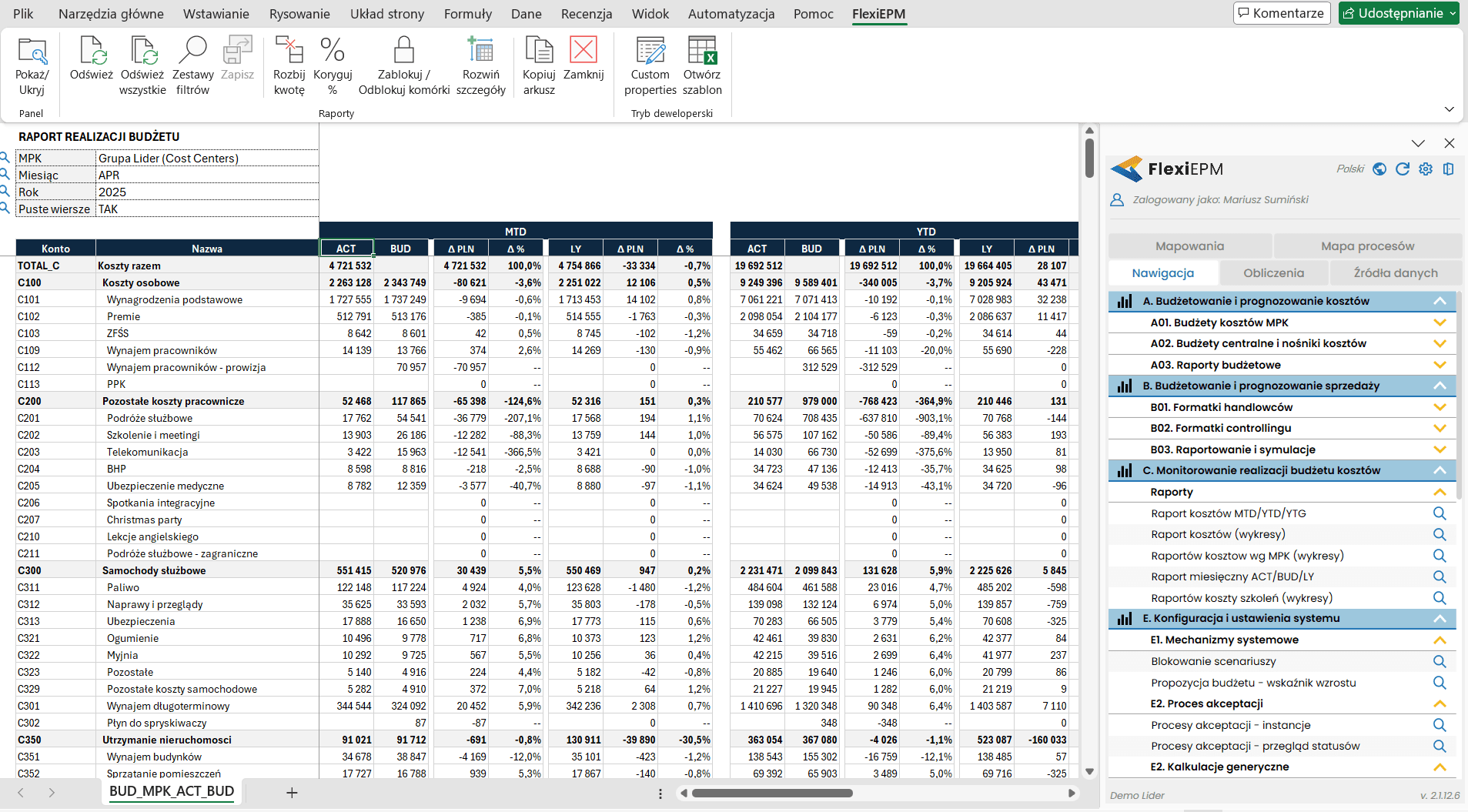
The system supports budgeting in a format consistent with managerial reporting and cost controlling, linking employees to the organizational structure, cost centers, and reporting dimensions for full control over personnel cost planning.
FlexiEPM allows you to easily change these parameters at any time, so you can easily adjust budgets and forecasts to planned organisational changes. The system also allows you to transform historical data to comply with the new organisational hierarchy, which facilitates cost analysis in the current company structure.
Workforce planning in FlexiEPM covers not only FTE and headcount but also promotions and salary adjustments. The system allows smooth updates to job titles and pay structures, streamlining the compensation budgeting process.
By combining vacancy planning, new positions, and organizational changes, FlexiEPM enables you to build a comprehensive HR budget that reflects the number, type, and distribution of employees needed for the upcoming year.
You can design a compensation matrix that automates subsequent planning stages (salaries, raises, bonuses and benefits), all tied to specific roles and structures.
Based on manager and HRBP input, the system automatically recalculates salary and personnel cost budgets, ensuring financial accuracy and consistency across all HR plans.
FlexiEPM precisely distinguishes between nominal and active employment, excluding employees on long-term absences (such as maternity or parental leave) from payroll budgets and headcount-based calculations.
Thanks to integration with HR absence registers, the system automatically accounts for all long-term absences in planning templates, removing the need for manual adjustments and improving planning accuracy.
As a result, you get a complete picture of your workforce, both total headcount and actively working employees included in payroll budgets, ensuring better forecasting and cost management. This approach enables more accurate budget planning and better human resource management.
FlexiEPM keeps many versions of the workforce plan, and the number of versions and scenarios is not limited. You create a new version from any existing one.
In a version, you change vacancy statuses, the organizational structure, the pay rise matrix and incentive parameters, and the cost is recalculated straight away. At Grupa Żywiec, such scenarios replaced rebuilding spreadsheets after every pay or organizational change, and a full budget recalculation takes about 12 minutes.
You compare variants in reports. In every version, the workforce plan, the pay rise budget and personnel costs are calculated using the same rules.
FlexiEPM offers flexible operational staffing planning, enabling organisations to plan based on staffing needs, which is particularly useful in cases of high turnover, seasonality, or standardisation of skills and remuneration. This eliminates the need to create a detailed plan for each employee and vacancy in production, logistics centres or call centres.
Instead of planning each position individually, the system allows aggregate modeling of labor demand based on activity levels, seasonality, or turnover. Changes in business assumptions, such as sales or production forecasts, automatically recalculate required workforce levels.
The model can be based on man-hours, FTE, or total payroll amounts, giving organizations flexibility to plan according to their operational needs.
#KNOWLEDGE BASE

When does IFRS 16 apply? How should a lessee present leases in its financial statements to comply with IFRS 16? How do you measure the right-of-use asset and the lease liability?

How do you prepare a consolidated balance sheet for a group of companies? This practical guide walks you through the process step by step: preparing separate balance sheets, local adjustments, capital adjustments and goodwill, and eliminations of intercompany balances.

Since IFRS 16 came into force, lease liabilities have become more complex to manage. One of the key elements is discounting future payments. In this article we show how to calculate the present value of the liability, compare different approaches to the discount factor and explain what to watch out for in monthly calculations.









Streamline your planning, controlling, reporting, and consolidation processes in a single system.
Eliminate errors and reduce time-consuming tasks through integration and automation.