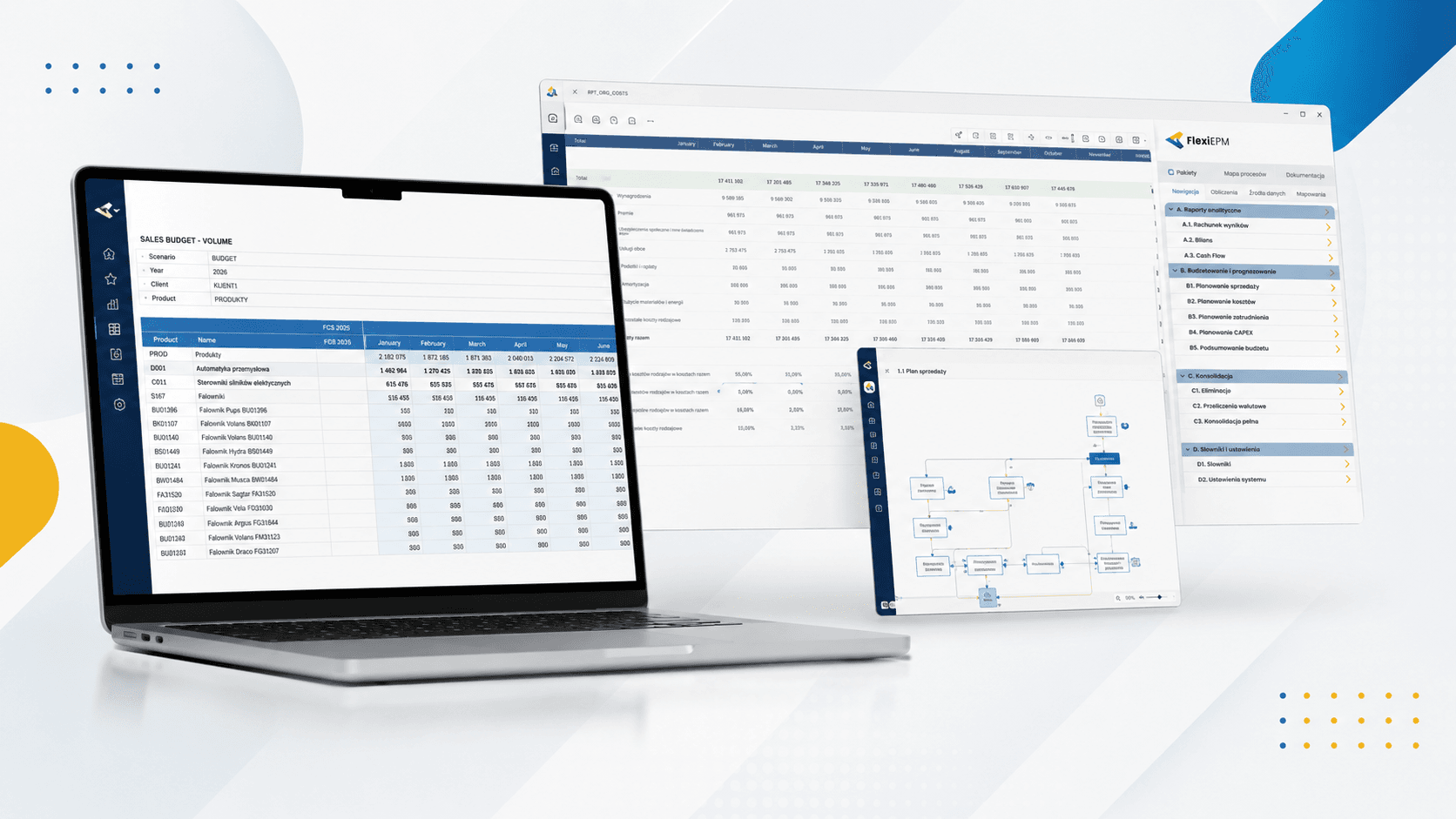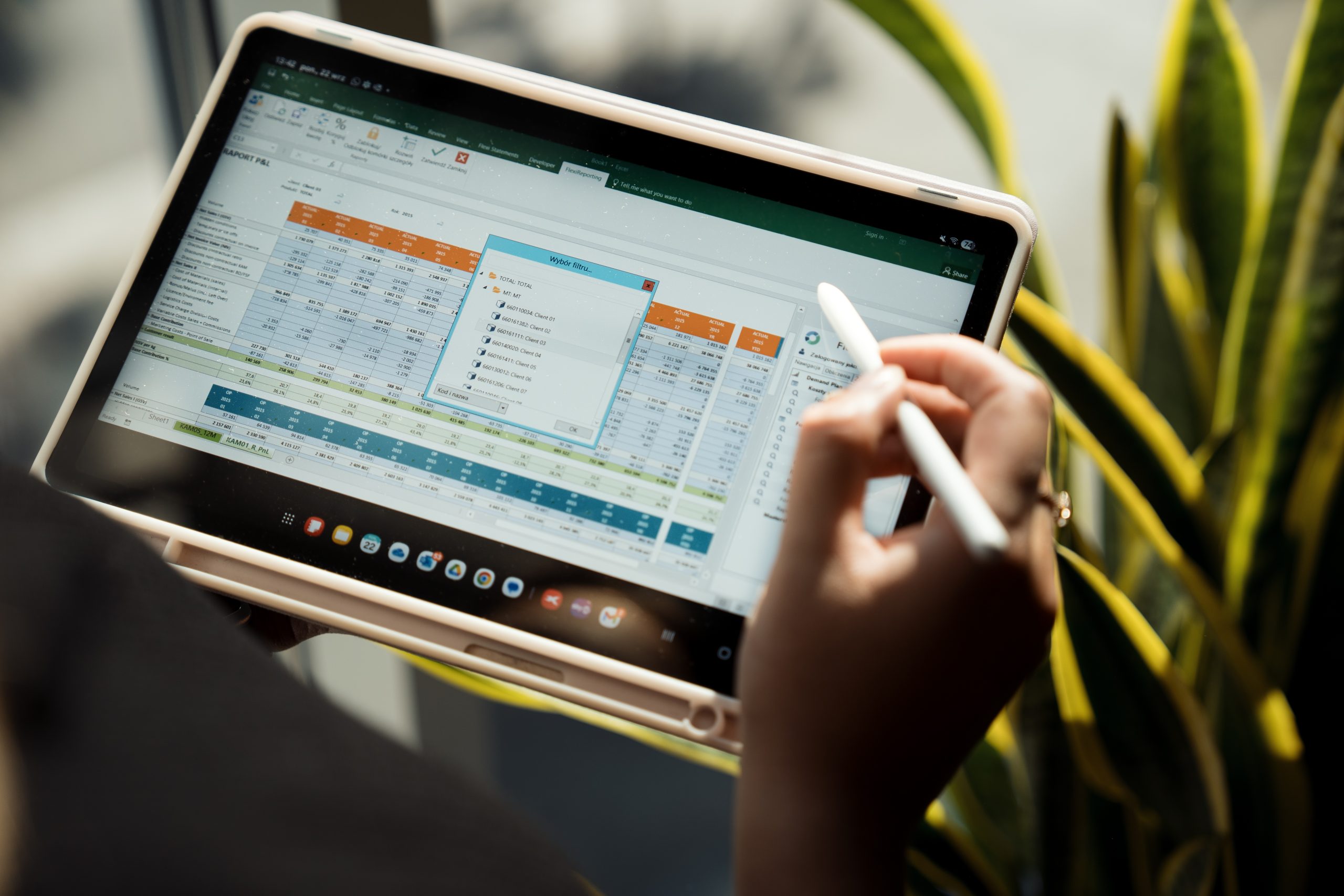
In this article I focus specifically on performance management processes and tools in the context of financial controlling processes: planning, allocation and performance monitoring. This subset of organisational performance management is often referred to by the abbreviation FP&A (Financial Planning and Analysis). The term appears more and more often in practitioners’ conversations, for example when defining roles and positions in controlling departments or IT tools that support cooperation between finance and the rest of the company.
What you will learn from this article
In recent weeks I have been thinking a lot about the best approach to designing and implementing financial planning and analysis systems. Having had the chance to observe from the sidelines the decision-making processes of dozens of companies, I wondered about the motivations of project teams and the possible scenarios for implementing FP&A tools. I came to the conclusion that the decisive factor in choosing and implementing a system for budgeting, forecasting and performance monitoring is the size of the company. The approach and decision criteria appropriate for a large corporation with 1,000+ employees and international operations will not work at all in a smaller company where controlling is only taking its first steps towards professionalising and stabilising its planning and performance analysis processes.
And that is essentially what this article is about. I will try to discuss alternative approaches to delivering FP&A projects that suit large, mid-sized and small companies. As with any generalisation, it may turn out that the ideas and recommendations presented here will not apply in some cases. I believe, however, that for many readers it will be a valuable and inspiring introduction that helps in planning initiatives related to implementing FP&A tools in a company.
What exactly are FP&A systems?
For many years controlling departments worked persistently to make the spreadsheet their basic working tool.
- A strategic plan needs to be prepared: we will do it in Excel.
- Budgeting and forecasting: also in Excel, even when templates have to be prepared for 50+ managers and the data then collected from them and consolidated.
- Analyses and simulations: also in Excel.
- Management reporting, cost allocation, performance monitoring: here too the spreadsheet was an indispensable tool for many years.
On the one hand, it is a tool made for working with numbers. Formulas, links and pivot tables offer enormous possibilities for modelling and processing financial data. The flexibility and versatility of Excel in a way blurs the boundaries. Excel seeps into processes in which the volume of data, the complexity of processing it or the need to coordinate the flow of information call for solutions of a completely different kind.
FP&A tools are IT solutions that support companies in financial planning and performance monitoring. They support budgeting processes by making it easier and faster to share planning forms across the organisation and to consolidate the data coming in from “the business”. They not only allow effective bottom-up planning, but also give controllers the ability to run simulations and analyses in budgeting and forecasting, which makes it possible to shorten and optimise planning cycles significantly. They combine actuals, budgets and forecasts and provide the complete information required by managers. They take care of the consistency and confidentiality of sensitive financial data, giving each stakeholder the ability to take part in planning and reporting in line with the permissions resulting from their role in the organisation. In short, they do what controlling struggles with most when the spreadsheet is the main tool.
It is also worth noting that in the strategy of digitalising controlling and financial reporting, FP&A systems are as important as (if not more important than) Business Intelligence solutions. They are responsible for key finance processes and are necessary for BI tools to have the right data for reporting and visualisation.
FP&A at corporate level: large companies need dedicated tools for planning and data analysis
A large company means big challenges and big needs. The management information system has to meet the needs of dozens or hundreds of managers at different levels of management. Where the organisation operates as a group of companies, the need to consolidate data appears.
Planning processes become much more complicated because of the many threads of the process and the number of interconnections between the individual links that make up the company’s value chain. Monitoring performance requires combining data from many systems, reconciliations, settlements and management allocations. Business segments appear, along with the need to look at their results across all the organisation’s activities, regardless of the formal or organisational structure.

Too much risk. Anyone who thinks otherwise (which they are of course entitled to) condemns themselves to a constant “fight” with inefficiencies. A fight whose cost will be errors, delays, stress and, ultimately, anger and frustration among all stakeholders of FP&A processes (the management board, managers, controlling).
This is probably why organisations that have reached the “corporate” level (both internationally and locally) implemented specialised software for planning, consolidation and reporting of financial results long ago. Effective planning and control of an organisation operating in a dozen or several dozen countries requires well-designed processes and tools matched to the scale of operations.
Large organisations have the comfort that they can easily afford to implement practically any solution. Although the licence and implementation costs of some solutions can be very high, from the perspective of companies with turnover counted in billions or tens of billions, price criteria may take a back seat in the software selection process. In our market, too, there are more and more companies that can afford to choose from the “full menu” of available FP&A or EPM systems.
In such cases the capabilities of the target platform become crucial. And usually it is not about specific features, but about the overall vision of such a solution. The most important question decision-makers should ask themselves is: “what can this software offer my organisation?”
The selection process should be run with a strategic view. Get to know exactly the modules the system offers and map them to the organisation’s needs… Verify whether the system will let us coordinate a distributed operational and financial planning process that integrates all budget responsibility centres. Whether and how the system will cope with the challenges of consolidating many companies, geographical markets, segments and business models.
Answer the question whether the chosen solution will provide proper support and data consistency in the processes run by controlling (budgeting and forecasting, performance monitoring), financial reporting (consolidation, reporting needs resulting from the accounting policy in force), HR (planning and monitoring headcount and personnel costs) and operational departments (demand forecasting, operational planning).
And consciously build a “roadmap” for the FP&A or EPM project. Identify priorities for immediate implementation and areas that can be developed in the future. Clearly define the boundaries of the new system, indicating areas where other solutions will be needed. On this occasion it is also worth defining the overall architecture of the company’s management information system. Decide how data will be processed in an environment in which the operational systems (ERP, CRM, GL, etc.) of individual units, a data warehouse (or warehouses), Business Intelligence tools and, finally, EPM/FP&A all work side by side…
How large companies choose an FP&A system
Think strategically
The key question is: “what can this software offer my organisation?” Check whether the system will coordinate a distributed planning process and cope with consolidating many companies, markets and segments.
Build a roadmap
Identify the priorities for immediate implementation and the areas to develop in the future. Define the architecture of the management information system: ERP, CRM, data warehouse, BI and EPM/FP&A.
Plan in stages
A comprehensive FP&A implementation takes 1–2 years. Dividing it into stages and streams brings the first results after just a few months, so the project runs in an agile way.
Of course, this way of thinking leads automatically to the vision of a “big project”. In large companies a comprehensive FP&A implementation really is a big project. A simpler project than an ERP implementation, but still one that very often lasts 1–2 years. That is a reasonable time horizon to build, sensibly, the skeleton of a performance management system for a complex organisation.
With a project of this scale, proper management of priorities becomes hugely important. The fact that the whole project will last 18 or 24 months does not mean that the work cannot be planned so that the first effects are visible to the organisation after just a few months. Dividing the whole undertaking into stages and streams, combined with proper planning, makes it possible to run the project in an “agile” way.
In mid-sized companies FP&A is important and needed. Although constraints often appear, putting the decision off “until later” effectively blocks the organisation’s growth. If a company can afford an FP&A system, it should have it now, to remove bottlenecks and build processes suited to the scale the company aspires to.
FP&A in growing companies: a nice extra or a solution that stimulates growth?
Who is most often looking for improvements and automation in budgeting, forecasting and management reporting today? First of all, large and mid-sized companies that are beginning to notice the inefficiencies and limitations resulting from the lack of suitable tools. Companies that have usually been on a path of growth and business development for some time.
Companies that are outgrowing Excel
Most of these companies start to feel that they are “growing out of Excel”. Templates, reports and models that were sufficient just a few years ago now start to pinch. The company has developed its organisational structures, increased headcount and built new business segments. The amount of data has grown significantly. The group of managers who have to be involved in planning and performance monitoring has widened. The business model has become more complicated, and simple reporting based on documents in the finance and accounting records no longer answers the questions and needs of owners and managers… This is a typical scenario that puts controlling departments on the path of looking for an FP&A or EPM system.
Local branches of international corporations
The second group is local branches of international corporations that the parent company has not equipped with tools suited to local needs. A fairly common scenario is the need to report local budgets, forecasts and actuals to group analytical tools at a summary level. The corporation looks at its companies in terms of summary financial results. Group systems impose a specific layout, timetable and reporting process, but they absolutely do not provide support for controlling processes run locally. The corporation has tools and processes suited to use at group level. Local branches have to take care themselves of solutions that let them meet the obligations imposed by the parent company.
What do the two cases have in common?
The need to get financial planning and performance monitoring under control at the scale of a dozen or several dozen managers running the relevant links of the organisation’s value chain.
The vast majority of such companies should have no problem finding a business case for FP&A projects. What is more, a “think big” strategy is probably the best approach to managing growth: constantly looking for bottlenecks and removing them in a way that gives comfort for the next few years of business development.
At the scale of a company with 200, 500 or 1,000 employees, the management board and owners will naturally look at the costs of such an undertaking in the context of the expected benefits. That is why one of the key elements of implementing an FP&A system in such companies is a thorough review of the market of available solutions, and a search for a compromise between the vision and functionality of the solution and the costs of buying and implementing it. Optimising the whole decision-making process so as to build real value for the future while taking current financial constraints into account.
When does Excel start to hold a company back?
It is worth considering an FP&A system when:
- budgeting involves a dozen or several dozen managers,
- data has to be collected from many files,
- controlling loses time merging spreadsheets,
- the number of budget and forecast versions is growing,
- reporting takes too long,
- the management board needs faster scenarios and better control over the result.
FP&A in smaller companies: how long can a spreadsheet be enough?
First, a quick explanation of what I mean by “smaller companies”. I believe that at the scale of an organisation with up to 50–100 employees it is possible to manage financial plans and business performance using a spreadsheet and general, typical analytical tools (such as Power BI).
In FP&A, “growing pains” appear when the management team no longer fits in one room. I often see that it is at the scale of 100–200 employees (which effectively means 10+ directors and managers) that dedicated people responsible for controlling start to appear in the organisation. Such companies usually have relatively simple transactional systems: very often a basic finance and accounting system (with a standard chart of accounts, meaning one not tailored to the company), simple inventory records, or a document workflow system used only for the substantive approval of invoices coming in from suppliers.
Analytical work that is meant to result in transparent reporting of the company’s performance is hard when the right input data is missing. Planning is also hard when data and operational processes are not in order. Controlling is based entirely on Excel or, worse, on many Excel files, built ad hoc and constantly extended to cope with successive exceptions, data errors or questions from the management board and owners. It seems an FP&A system would be very useful, because there is a huge amount of manual work.
Except that the source of the problem often lies elsewhere. It is not controlling in a spreadsheet that is inefficient, but the operational processes and systems. With a limited (or even very limited) budget for IT investments, it is better to spend it first on solving the problems at their root. Problems with planning, performance monitoring and performance management in a still small organisation are best solved by building the foundations for further growth, such as a better finance and accounting system or ERP. When making optimisation decisions, it is better to avoid treating FP&A tools as a “plaster” meant to mask dysfunctions and limitations at the level of transactional systems.
In smaller companies FP&A tools will be useful too. Thanks to them, the work of the people responsible for financial planning and data analysis will become easier. If the company is able to stabilise its financial planning processes (to achieve the repeatability that allows them to be implemented in a system) and there are tools adequate to current needs and within reach, there is no reason to hold such a project back. All the more so because the “think big” approach applies here as well, and at a smaller scale the prospects of rapid growth are even more real than in established companies…
FP&A in smaller companies: how long is Excel enough?
The source of the problem
Often it is not Excel that is inefficient, but the operational processes and systems. With a limited budget, it is better to solve the problems at their root first: a better finance and accounting system or ERP.
When to implement FP&A?
If the company has stabilised its planning processes and the tools are within financial reach, there is no reason to wait. At a smaller scale the prospects of rapid growth are very real.
Summary and conclusions
Practically every company needs FP&A tools. The largest companies have usually already implemented them and developed effective processes for budgeting, forecasting and performance monitoring. Slightly smaller but still large ones increasingly see their potential for stimulating growth and improving operational efficiency.
In smaller organisations planning and analysis systems can also deliver added value. In these cases, however, it may still be an investment made too early. At the scale of around 100–200 employees, such a system will be relatively costly to implement and maintain. Here the complexity of FP&A processes may be comparable to that in larger companies, and the number of problems may be even greater because of the limited staffing of controlling, the lack of systematised processes and the gaps and dysfunctions in operational systems. Here the solution of choice may be to postpone the FP&A project and give priority to solving the problems at their root.
In every case an FP&A project should be treated as building a solution tailored to the given organisation. A planning and analysis system should be a “tailor-made suit” if these processes are to contribute to the company’s competitive advantage. It is actually hard to talk about an “out of the box” FP&A system. A universal planning model does not exist, even if in some segments it may be possible to find predefined tools or industry templates.
That is exactly why designing and implementing an FP&A system is a difficult and demanding project. But one worth carrying out. Especially in mid-sized companies, where the business need is usually very clear, the organisation is already ready for such a tool, and the management board and owners expect further growth and effective competition with the largest companies in the industry.
Conclusions and recommendations
Large corporations (1,000+ employees)
They have already implemented specialised FP&A/EPM systems. They need a strategic roadmap and a staged implementation.
Mid-sized companies (200–1,000 employees)
They are outgrowing Excel and should implement FP&A now to remove bottlenecks and support growth.
Small companies (fewer than 200 employees)
Excel may be enough. The priority is to fix operational systems before investing in FP&A.